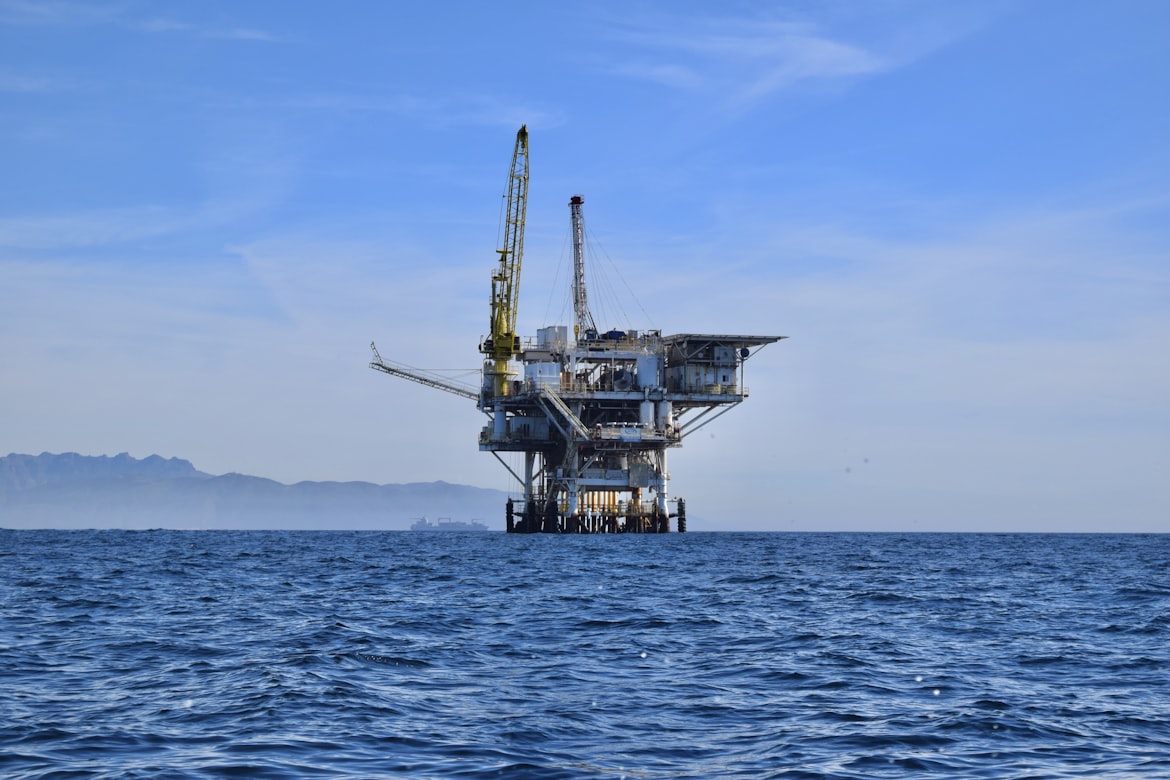
For decades, Somalia’s offshore basin has existed as one of the energy industry’s great unresolved frontiers, a vast, underexplored stretch of the western Indian Ocean believed to hold significant hydrocarbon potential, yet largely untouched by modern deepwater drilling. Political instability, maritime disputes, security concerns, and the absence of sustained exploration campaigns have kept Somalia outside the mainstream of global offshore development, even as neighboring East African states transformed into major gas provinces.
That long-standing isolation is about to be tested. The deployment of a sophisticated Turkish drillship to Somali waters marks a pivotal technical and geopolitical milestone. It signifies the transition from speculative seismic mapping to active exploration, putting the basin’s actual hydrocarbon potential to the ultimate test.
Somali’s Exploration History
1948-90: Major IOCs including ExxonMobil, BP, Shell, Chevron, Conoco and Eni hold concessions. Eight petroleum basins mapped. The civil war in 1991 halted exploration.
1991-2011: State collapse, civil war, and rampant piracy render Somalia inaccessible. Zero exploration wells drilled
2012-2024: New Somali Petroleum Law enacted (2019). Shell/ExxonMobil sign a 2020 roadmap for offshore development. Fresh 2D and 3D seismic acquired by TGS and others. No drilling commitments materialise.
2024-2025: Turkey-Somalia Defence & Economic Framework Agreement signed (Feb 2024). TPAO awarded three offshore blocks. 3D data was collected across 4,464 km² over 234 days (Oct 2024 – Jul 2025). Onshore E&P agreement signed April 2025.
2026: Turkey’s offshore campaign may pave the way for Somalia’s first modern deepwater exploration well.
The Technical Challenge of Deepwater Somalia
Despite the optimism, moving from seismic anomalies to proven reserves introduces severe technical headwinds:
? The high-prospectivity zones sit in deep and ultra-deep waters. Drilling in these environments requires highly advanced, dynamically positioned drillships capable of handling extreme hydrostatic pressures and complex subsurface geologies. Turkey’s deployment of a state-of-the-art vessel addresses the immediate asset deficit, but the operational execution must be flawless.
? Decades without active drilling mean that Somalia entirely lacks the localized supply chain infrastructure critical for deepwater operations. There are no specialized logistical hubs, heavy-lift ports, or nearby oilfield service clusters to provide rapid engineering support, spare parts, or specialized drilling fluids. Every piece of equipment must be integrated into a lengthy, high-cost international supply chain, dramatically inflating the daily operational burn rate.
? Until a multi-well exploration campaign establishes definitive stratigraphic control, the exact nature of the reservoirs remains theoretical. Operators face the risk of unexpected pressure regimes, complex lithologies, or finding high-volume but commercially unviable gas compositions rather than high-value crude.
? Parts of Somalia’s offshore environment present operational challenges linked to ocean currents, seasonal weather variability, and deepwater pressure regimes. These conditions increase both technical risk and operational costs.
Conclusion
Somalia’s offshore sector sits at the intersection of immense geological promise and profound geopolitical complexity. Turkey’s drillship initiative represents the most serious attempt in decades to unlock one of Africa’s least explored deepwater frontiers. What happens next will depend not only on hydrocarbons beneath the seabed, but on diplomacy, security, governance, financing, and technical execution above it.